
Consul-General Attends the Opening Ceremony of the Advanced Sabo Course 2026
2026/10/13
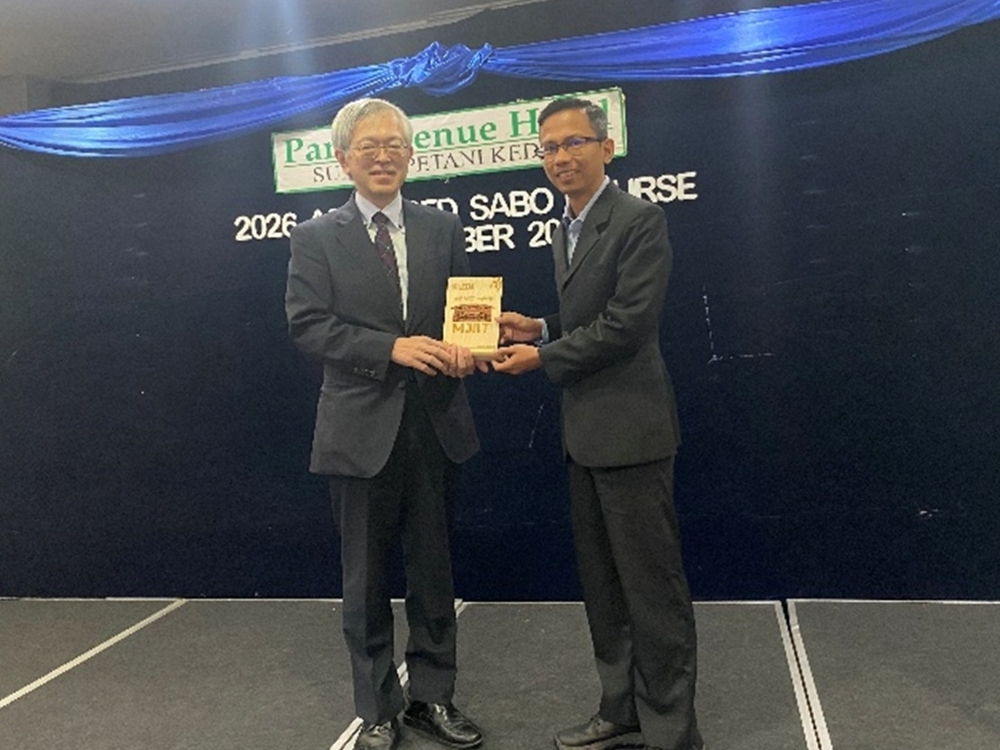
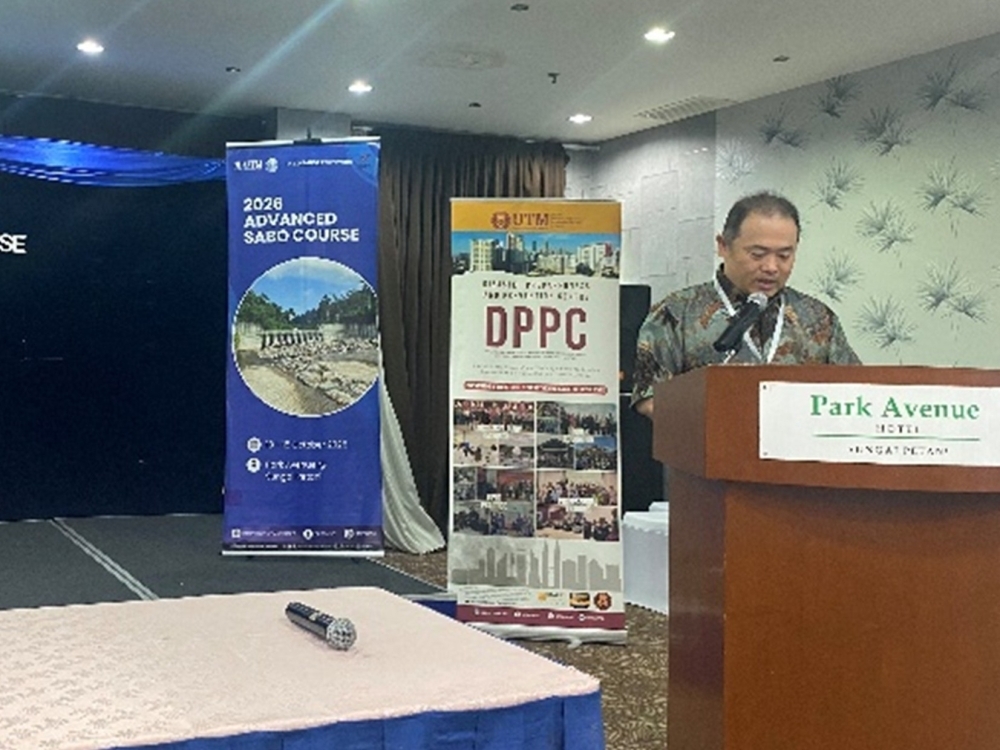
On October 13th, Mr. Shinya Machida, Consul-General of Japan in Penang, attended and delivered remarks at the opening ceremony of the Advanced Sabo Course 2026 in Sungai Petani, Kedah. The three-day course, held from October 13th to 15th, was organised by the Disaster Preparedness and Prevention Centre (DPPC) of the Malaysia-Japan International Institute of Technology (MJIIT), Universiti Teknologi Malaysia (UTM), in collaboration with Yachiyo Engineering Co., Ltd. The course aimed to share Japan’s expertise in sabo (erosion and sediment disaster control) engineering and disaster management while promoting human resource development and technical capacity building in Malaysia.
At the opening ceremony, Dr. Shohei Matsuura, Deputy Director of the National Research Institute for Earth Science and Disaster Resilience and a former expert assigned to MJIIT, highlighted how Japan’s sabo technologies have evolved through decades of practical experience and lessons learned from natural disasters. He emphasised the importance of comprehensive approaches encompassing field investigations, planning, infrastructure development, and maintenance adapted to local conditions. He also introduced the practical cooperation between MJIIT and Yachiyo Engineering in applying Japanese expertise to disaster prevention challenges in Malaysia.
In his remarks, Mr. Machida highlighted the longstanding cooperation between Japan and Malaysia in technical education and human resource development, including the Look East Policy launched in 1982 and the establishment of MJIIT. He emphasised the significance of sharing Japan’s experience and expertise in disaster prevention with Malaysia. Referring to the debris flow disaster at Gunung Jerai in Kedah in 2021, he stressed the importance of combining structural measures with early warning systems, community preparedness, and human resource development. He also underscored that technology alone cannot protect lives and that engineers, researchers, and government officials play essential roles in translating technical knowledge into effective disaster prevention measures.
The Consulate-General of Japan in Penang will continue to support exchanges and cooperation in disaster prevention among universities, research institutions, companies and government agencies in Japan and Malaysia. Looking ahead to the 70th anniversary of diplomatic relations between Japan and Malaysia and the 50th anniversary of the decision to establish the Consulate-General of Japan in Penang in 2027, the Consulate-General will continue working with relevant partners to promote the practical application of Japanese expertise to local challenges and further strengthen cooperation between the two countries.